


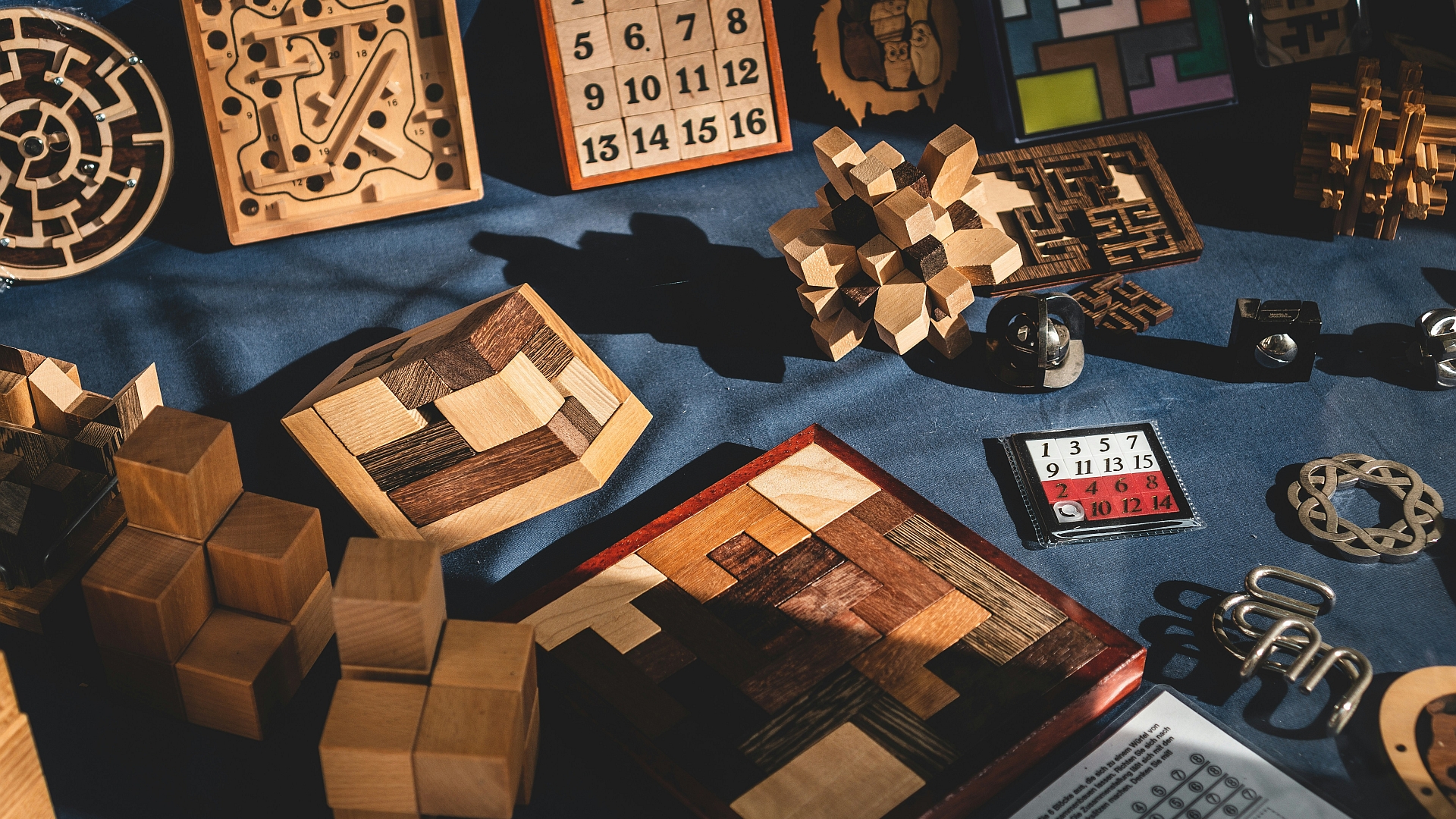
Puzzles originate in the East, in the vast area of the Indochina region.
The period of creation of the first puzzle is unknown because we have no historical sources that describe in detail the birth of this type of game. We have the first historical evidence from the journey undertaken by the Venetian Marco Polo who reached China by land and returned to Venice by sea between 1271 and 1295. In his book “Il Milione”, he together with the great Vasco da Gama, Portuguese explorer, the first European to sail directly to India rounding the Cape of Good Hope, gave rise in Europe to the knowledge of the first mental puzzles.
From the only available sources it is clear that puzzles were born and developed in parallel with the Buddhist religion, born in the 6th century BC in India. In the Buddhist religious tradition, solitary and thoughtful games help to meditate, relax the mind, distract oneself from everyday problems and connect with God.
The oldest known puzzle comes from Greece and appeared in the 3rd century BC. The game consists of a square divided into 14 parts and the aim is to generate different figures in these parts. It is not easy to do.
In Iran, “puzzle-locks” were made before the 17th century AD.
The next known mental puzzle event is recorded in Japan. In 1742, there is a mention in a book of a game called “Sei Shona-gon Chie No-Ita”.
Around 1800, the Tangram puzzle became popular in China and 20 years later it also spread to Europe and America.
The Richter Company in Rudolstadt began to produce Tangram-like puzzles in large quantities, made in different shapes, also called “Anker-puzzles”.
In 1893, Professor Hoffman wrote the book “Puzzles, Old and New” which, among other things, contained more than 40 descriptions of puzzles with secret opening mechanisms. This book became a real reference for this type of puzzle and was the basis for modern modifications.
The beginning of the 20th century is the most prolific period for the creation of logic games, the first patents were registered.
After the invention of materials such as plastic, which is very easy to model, the variety of puzzles developed. For example, probably the most famous mental puzzle in the world, the Rubik’s cube, would not be possible without modern polymers.
Today, the amount of existing puzzle games is practically incalculable, and they are divided into purely paper-based, which can be found both in newspapers and in dedicated magazines or online in digital version, or physical in versions of wood, plastic and other materials on the market.


